Fluke Insulation Testers Compared: 1503, 1507, 1587 FC, 1555
Start with the highest test voltage you need, then decide whether you need one reading or a trend. Here is how the Fluke range compares.
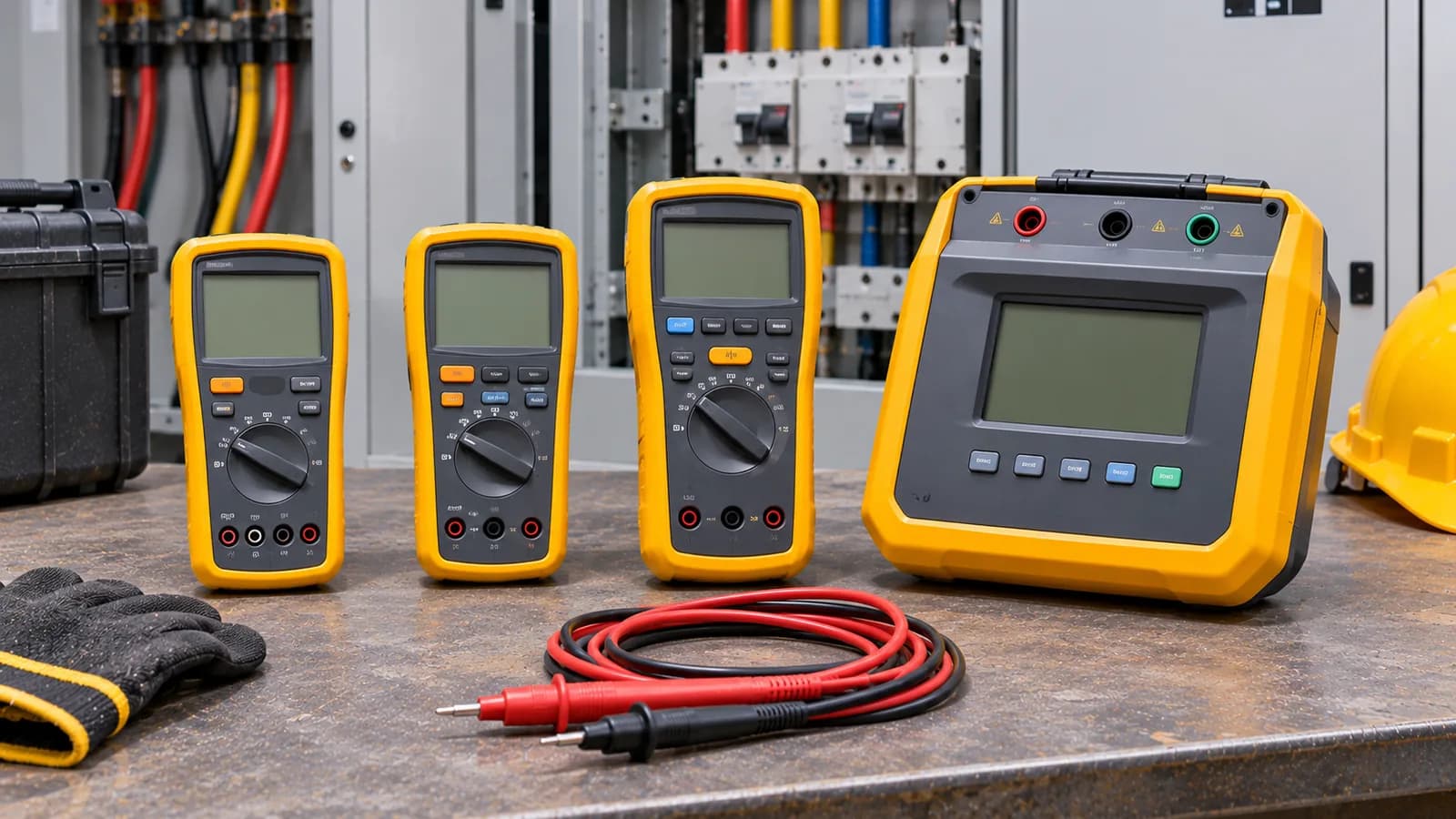
Buy the Fluke 1503 for routine low-voltage testing at 500 V and 1000 V. Buy the 1507 if you test motors and cables and need polarisation index. Buy the 1587 FC if you want a multimeter and an insulation tester in one body. Move to the 1550C or 1555 only for medium-voltage work.
The first question is the highest test voltage your work needs. The second is whether you need one pass or fail reading, or a trend you can defend in a report.
Side by side
| Model | Test voltage | Best for |
|---|---|---|
| Fluke 1503 | 500 V, 1000 V | Commissioning and periodic inspection |
| Fluke 1507 | 50, 100, 250, 500, 1000 V | Motors, cables and evidence-grade tests |
| Fluke 1577 | Up to 1000 V | Meter and insulation tester in one |
| Fluke 1587 FC | Up to 1000 V | As the 1577, with wireless logging |
| Fluke 1550C | Up to 5 kV | MV cable and large machines |
| Fluke 1555 | Up to 10 kV | High-voltage plant and long diagnostic tests |
1503 vs 1507
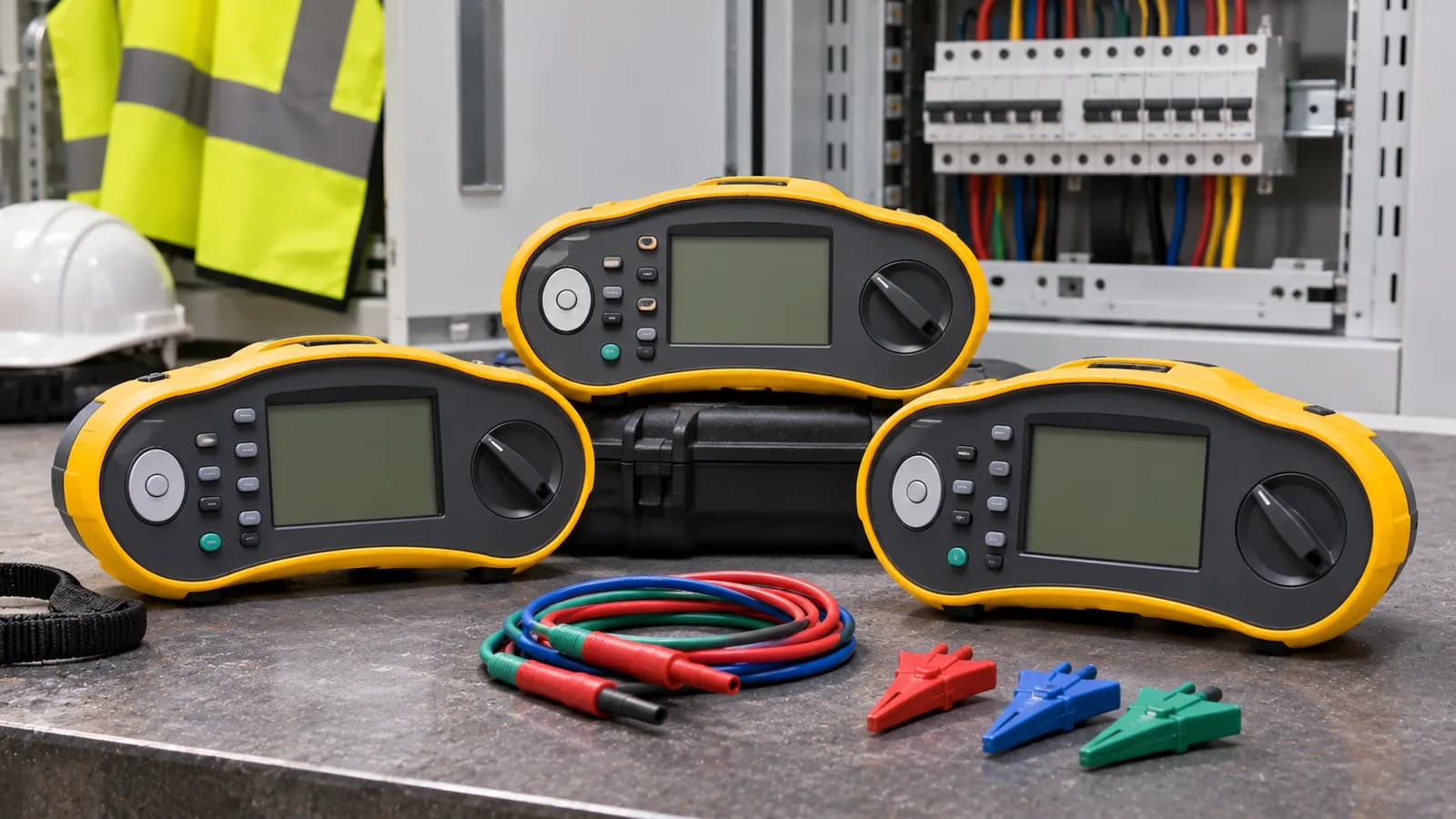
These two look alike, and most buyers should choose between them first. The 1503 has two test voltages and reads up to 2,000 MΩ. The 1507 has five test voltages, reads up to 10 GΩ and calculates polarisation index and dielectric absorption ratio automatically.
If your job ends with a single reading on a certificate, the 1503 does that. If you maintain motors or need 50 V or 100 V for sensitive wiring, the 1507 is worth the difference. For DEWA work, both cover the 1000 V test, and the general acceptance figure is 1 MΩ. Our DEWA insulation guide covers the method, including the higher limits on PV strings.
What polarisation index tells you
Polarisation index is the 10-minute insulation reading divided by the 1-minute reading. Dielectric absorption ratio does a similar job over a 60-second test. Healthy insulation keeps absorbing charge, so the reading climbs and the ratio is high. Damp or dirty insulation leaks steadily, so the reading stays flat.
Fluke's application note cites IEEE 43 for a minimum PI of 2.0 on insulation classes B, F and H, and 1.5 on Class A. A motor that passes a spot test but has a flat PI may need drying out. That result is more useful than a single number, because it tells you what to do next.
Insulation multimeters: 1577 and 1587 FC
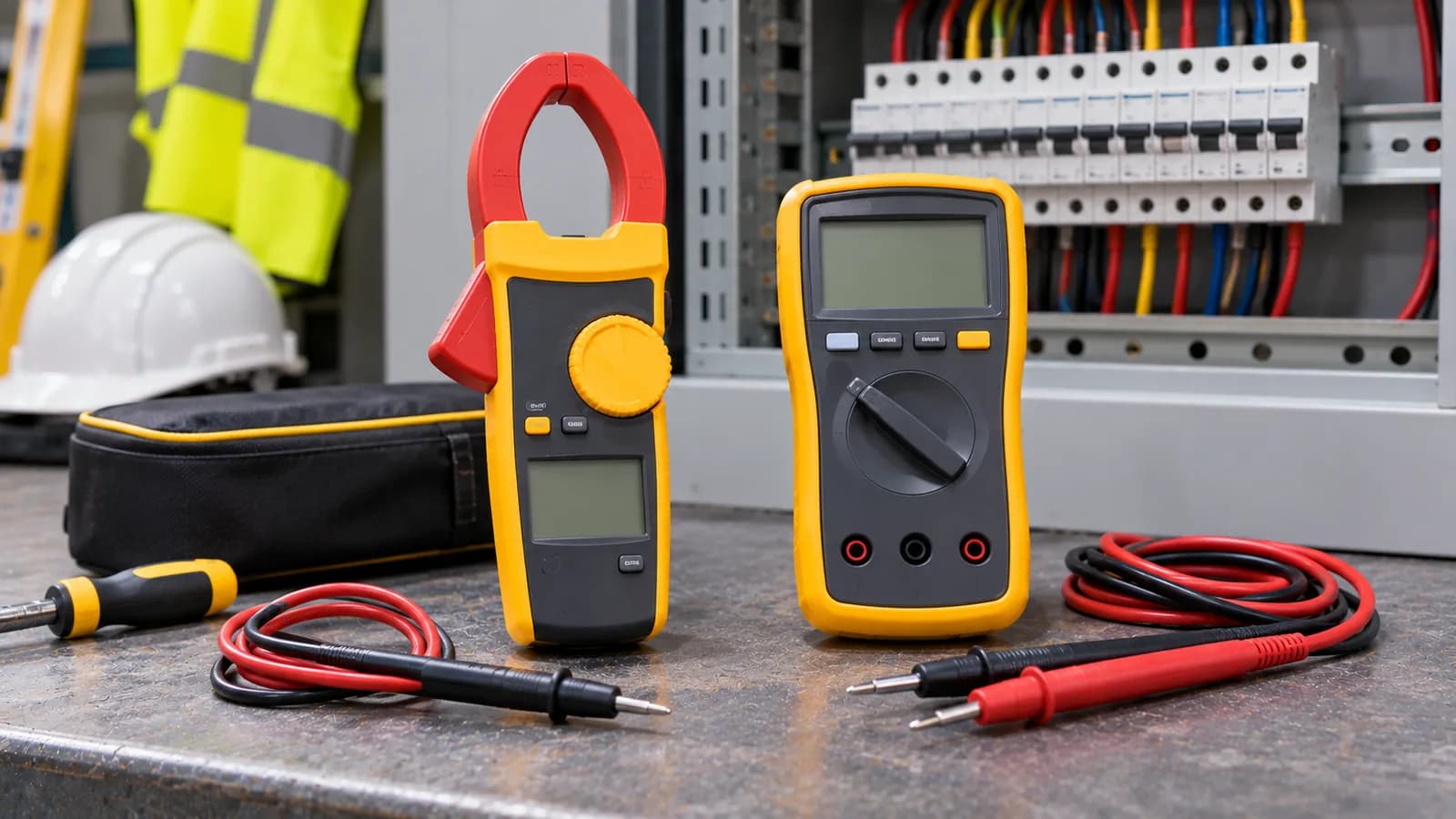
If you want to prove a circuit and test its insulation without carrying two instruments, these are the models to look at. The 1587 FC adds wireless logging, so results can leave the site with you. They suit maintenance electricians. If you test all day, a dedicated tester is usually the better tool.
When you need 5 kV or 10 kV
The 1550C and 1555 are for medium-voltage cable, switchgear and large machines. A test voltage is chosen from the voltage class of the equipment, so higher is not better. On a low-voltage final circuit, 5 kV is an expensive way to destroy equipment.
Long tests at high voltage need planning. Keep people away from the far end of the cable, and allow time to discharge it afterwards. A long cable holds a real charge after the test.
Three mistakes that spoil a result
- Reading too early. The insulation is still charging at five seconds, so the figure flatters the cable. Hold the test for the full minute.
- Leaving sensitive equipment connected. Disconnect SPDs, dimmers, drives and electronic ballasts first.
- Ignoring temperature. Insulation resistance falls as it gets hotter, so a reading from a 45 °C plant room cannot be compared with one from an air-conditioned riser unless you record the temperature.
How they compare with Megger
We hold both brands, and Megger is a strong choice at higher voltages. Its MIT series covers low-voltage work, and the MIT1015 is a 10 kV instrument. Kyoritsu and Hioki are also on the shelf in our insulation testers category.
Common questions
Is a megohmmeter the same as an insulation tester?
Yes. Both names describe an instrument that applies a DC test voltage and reports resistance in megohms.
Can I use a normal multimeter instead?
No. A multimeter tests resistance at a few volts, which does not stress the insulation. A cable can read open circuit on a multimeter and still fail at 500 V.
Which Fluke insulation tester suits an electrician in Dubai?
The 1507 is the safer choice if you do mixed work. If you only test low-voltage installations to 1000 V, the 1503 is enough.
Buying in Dubai
All these models are stocked at our counter on Naif Road, Deira. You can collect the same day, or we deliver across the UAE in one to two working days. We are a supplier and stockist, not an authorised distributor. Send a model number on WhatsApp and we will reply with a price the same working day.