Fluke 87V vs 117 vs 179: Which Multimeter to Buy
The 117 is for electricians in buildings, the 87V for industrial plant and drives, the 179 for general bench and field work. Full spec comparison inside.
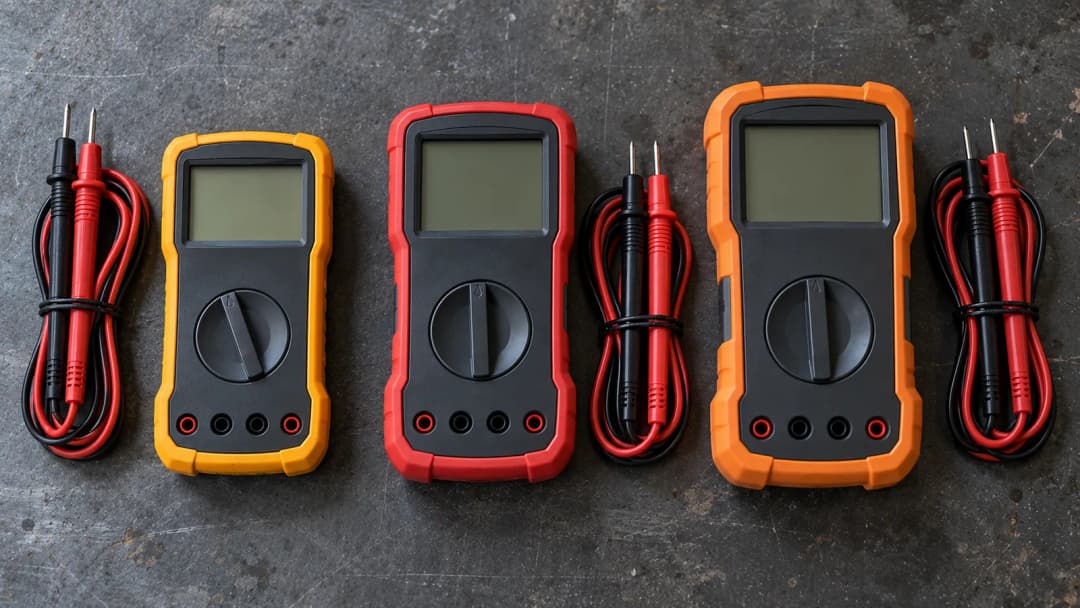
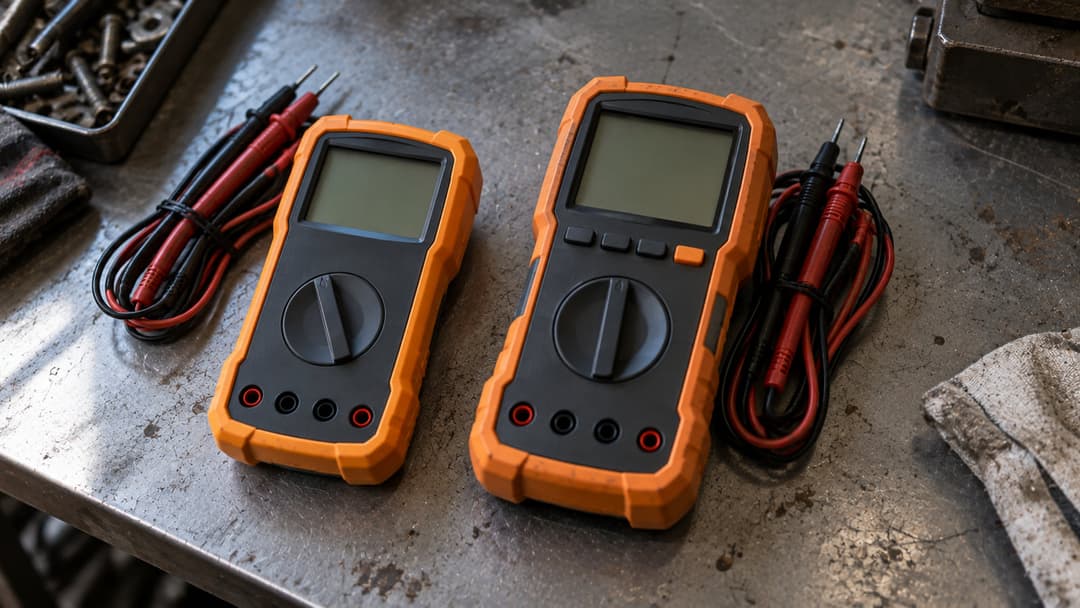
Pick the 117 if you work on building services and want non-contact voltage detection and a low-impedance mode. Pick the 87V if you work on motor drives, where the low-pass filter and 250 µs peak capture do real work. Pick the 179 if you want a solid general-purpose true-RMS meter with a temperature probe and do not need either specialism.
All three are true-RMS and all three are CAT III 600 V / CAT IV 300 V rated at minimum, so this is not a safety decision. It is a decision about which two or three features you will actually use.
Side by side
| Fluke 117 | Fluke 87V | Fluke 179 | |
|---|---|---|---|
| Intended work | Building services, commercial | Industrial plant, drives | General field and bench |
| Display counts | 6,000 | 20,000 | 6,000 |
| True-RMS | Yes | Yes | Yes |
| Low-pass filter for drives | No | Yes | No |
| Peak capture | No | 250 µs | No |
| Non-contact voltage (VoltAlert) | Yes | No | No |
| Low-impedance mode (LoZ) | Yes | No | No |
| Temperature | No | Yes, with probe | Yes, bead probe included |
| Frequency | Yes | Yes | Yes |
| Typical UAE buyer | Electrical contractor, FM team | Panel builder, plant technician | Maintenance generalist |
What the differences mean on site
The 117 and ghost voltages
The feature that earns the 117 its place is low-impedance mode. In a building with long parallel cable runs — which describes most Dubai towers — capacitive coupling induces a voltage on a disconnected conductor. A high-impedance meter reads it as 60 or 80 V and you cannot tell whether the circuit is live. LoZ puts a low impedance across the input and bleeds the induced charge away, so a ghost reads near zero and a real supply still reads full voltage. If you spend your day proving circuits dead in occupied buildings, that one function saves more time than everything else on the dial.
The built-in non-contact voltage detector matters for the same reason: a first-pass check without putting probes anywhere.
The 87V and variable speed drives
A drive output is a chopped PWM waveform, not a sinewave. Measure it with an ordinary true-RMS meter and you get a number that includes all the switching content, which is not the voltage the motor sees. The 87V's selectable low-pass filter rolls off above roughly 1 kHz so the reading settles to the fundamental — the figure you actually want when commissioning or fault-finding a drive.
Peak capture down to 250 µs is the other industrial feature. Inrush spikes and transient events are over long before a normal min/max function notices. If you are chasing nuisance tripping on a motor circuit, that resolution is the difference between seeing the event and guessing.
20,000 counts also means better resolution on low readings — useful measuring millivolt drops across a joint or a shunt.
The 179 as the sensible default
The 179 does not have a specialism, which is exactly why it suits a maintenance generalist. True-RMS, a bead temperature probe in the box, backlight, and the build quality the range is known for. If your week includes a bit of everything and none of it is drive commissioning or ghost-voltage hunting, it is the meter that will not annoy you.
Which one, by trade
- Electrical contractor, fit-out and building services: Fluke 117. The LoZ and NCV combination is built for exactly this work. The 117 and 323 clamp combo kit covers voltage and current in one purchase.
- Panel builder, switchgear assembly, plant maintenance: Fluke 87V. Add the 87V IMSK service kit if you need the full probe and clamp set.
- HVAC technician: the Fluke 116 ahead of all three — microamps for flame sensors and built-in temperature are what the job needs.
- General maintenance, facilities: Fluke 179, or the 179/EDA2 kit for the accessory set.
- Insulation testing as well as measurement: skip all three and take the Fluke 1587 FC, which puts a 1000 V megohmmeter in the same housing.
What none of them do
None is a clamp meter, so none measures current without breaking the circuit — pair any of them with something from the clamp meters range. None does power quality; harmonics and transient analysis need the power quality and energy instruments. And none is an insulation tester at the voltages DEWA asks for on certification work.
Common questions
Is the 87V worth the extra over the 117?
Only if you work on drives or need 20,000 counts. For building services the 117's LoZ mode is more useful day to day than anything the 87V adds.
Which is best for a UAE electrician starting out?
The 117. Ghost voltages in long cable runs are a daily problem in commercial buildings here, and it is the cheapest of the three.
How do these compare with the 88V?
The 88V is the 87V with automotive functions added. We cover that in Fluke 87V vs 88V.
What about the cheaper Uni-T alternatives?
We stock both. Uni-T covers the same basic measurements at a lower price and suits a second meter or a van spare; the Fluke range earns its premium on survivability and on specialisms like the low-pass filter. Browse Uni-T and Fluke and send us the two models you are weighing up.
Buying in Dubai
All the models above are stocked at our counter on Naif Road, Deira — collect the same day, or UAE-wide delivery in one to two working days. We are a supplier and stockist rather than an authorised distributor, and we quote the same working day. Send a model number on WhatsApp for price and availability.