Cable Fault Location Guide: TDR, Thumpers and Sheath Faults
Identify the fault, pre-locate it, then pinpoint it. Here is how TDR, arc reflection and surge generators fit together, and what each job needs.
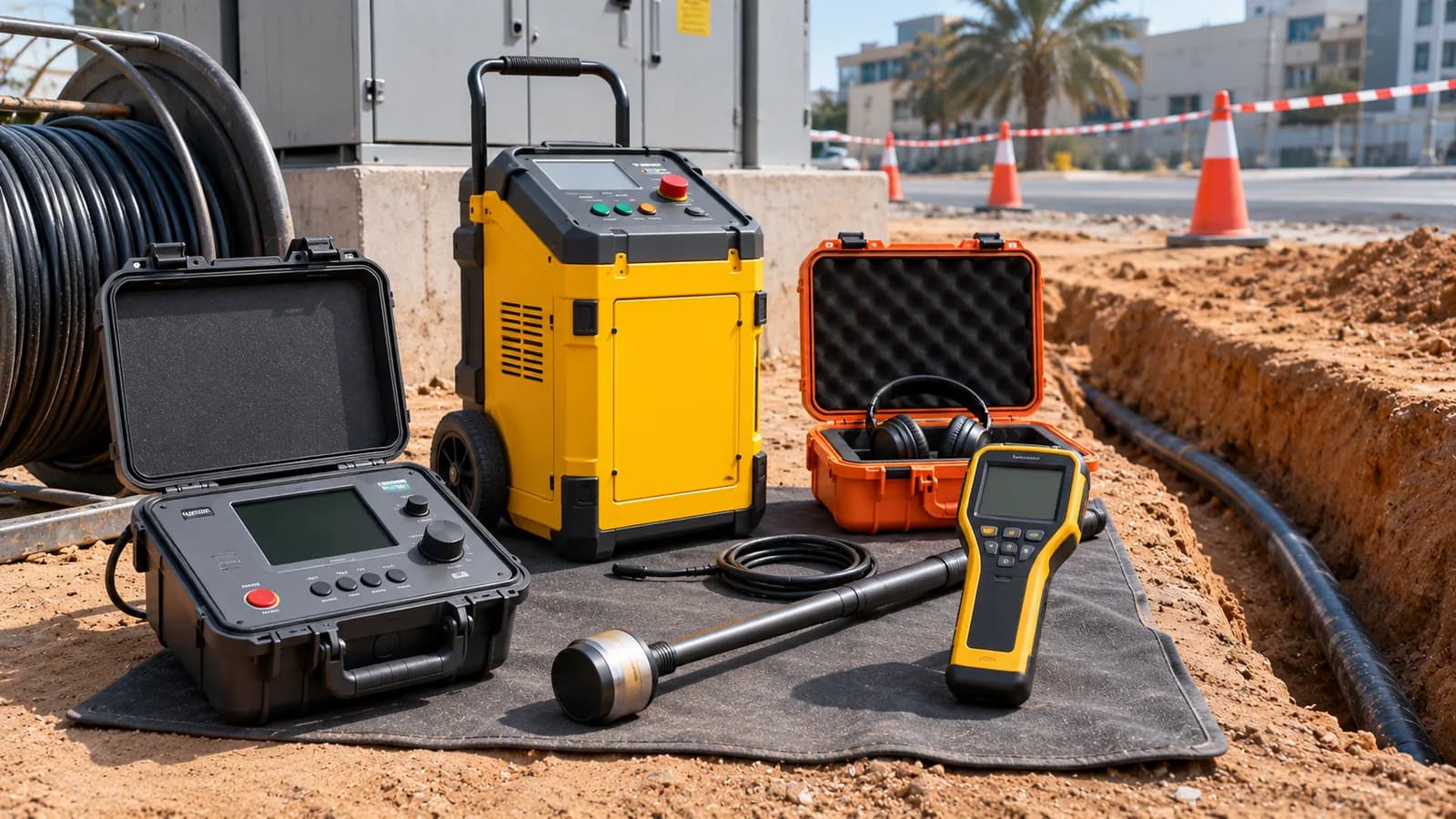
Finding an underground cable fault has three stages. You confirm the type of fault, you pre-locate it to get a distance along the cable, and then you pinpoint it so you dig once. The equipment you need depends on the fault's resistance and the voltage class of the cable.
Skipping a stage is how crews end up with several trial holes. This guide covers each stage and the Megger equipment we stock for it.
Stage 1: identify the fault
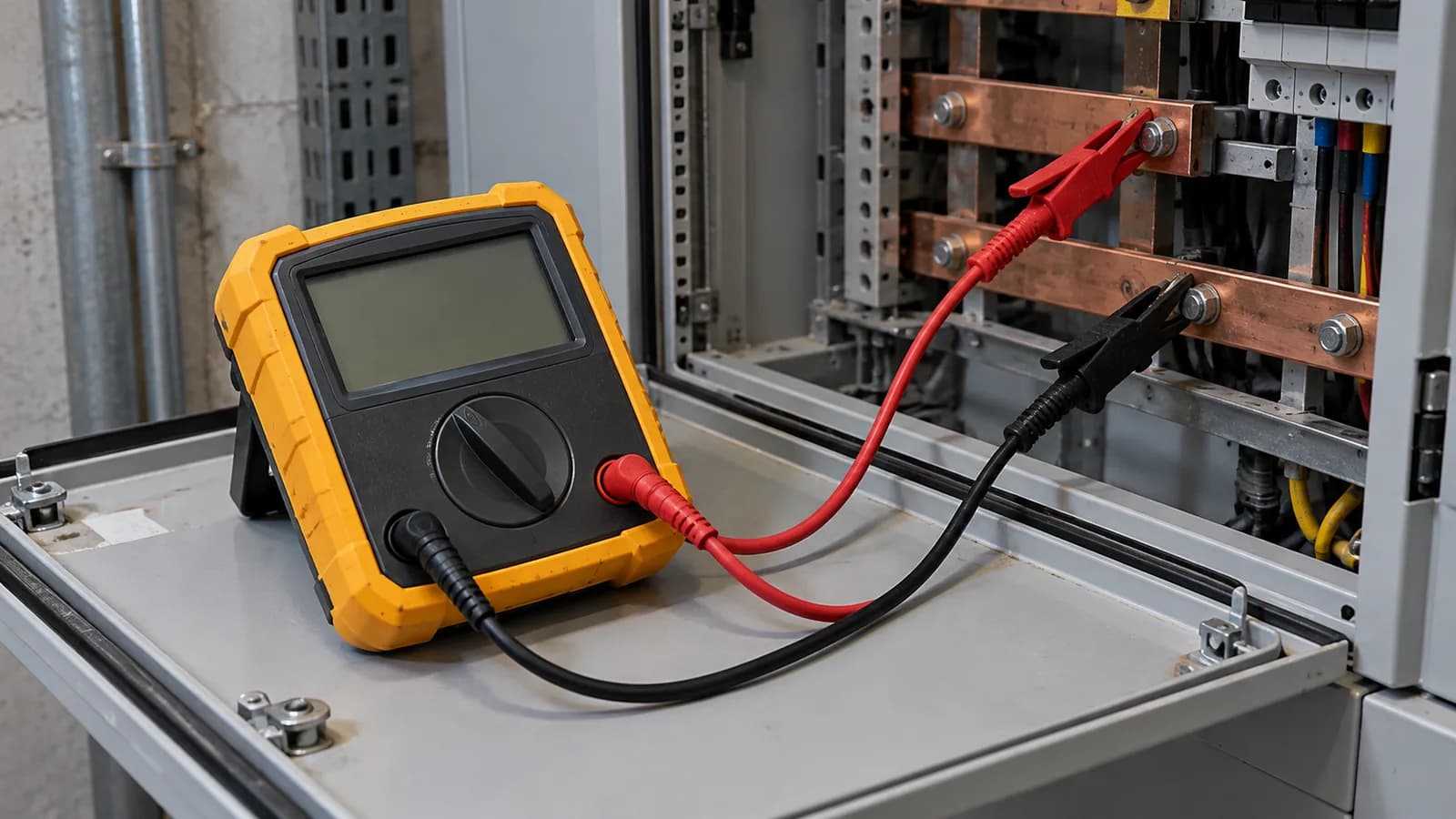
Before you connect anything, isolate the cable, prove it dead, earth it and confirm the far end is open. Then measure insulation resistance between conductors and to the sheath. The result tells you what you are dealing with.
| Fault type | What you see | Pre-location method |
|---|---|---|
| Open circuit or low-resistance short | Broken conductor, or a very low reading | TDR |
| High-resistance fault | Kilohms to megohms, breaks down under voltage | Arc reflection or impulse current |
| Sheath fault | Conductors healthy, sheath to earth low | Bridge or voltage drop method |
Stage 2: pre-locate with a TDR
A time domain reflectometer sends a pulse down the cable and times the reflection, which gives a distance to the fault or the cable end. It works well on opens and low-resistance shorts. A normal low-energy pulse cannot see most high-resistance faults, because the pulse passes through as if the cable were healthy.
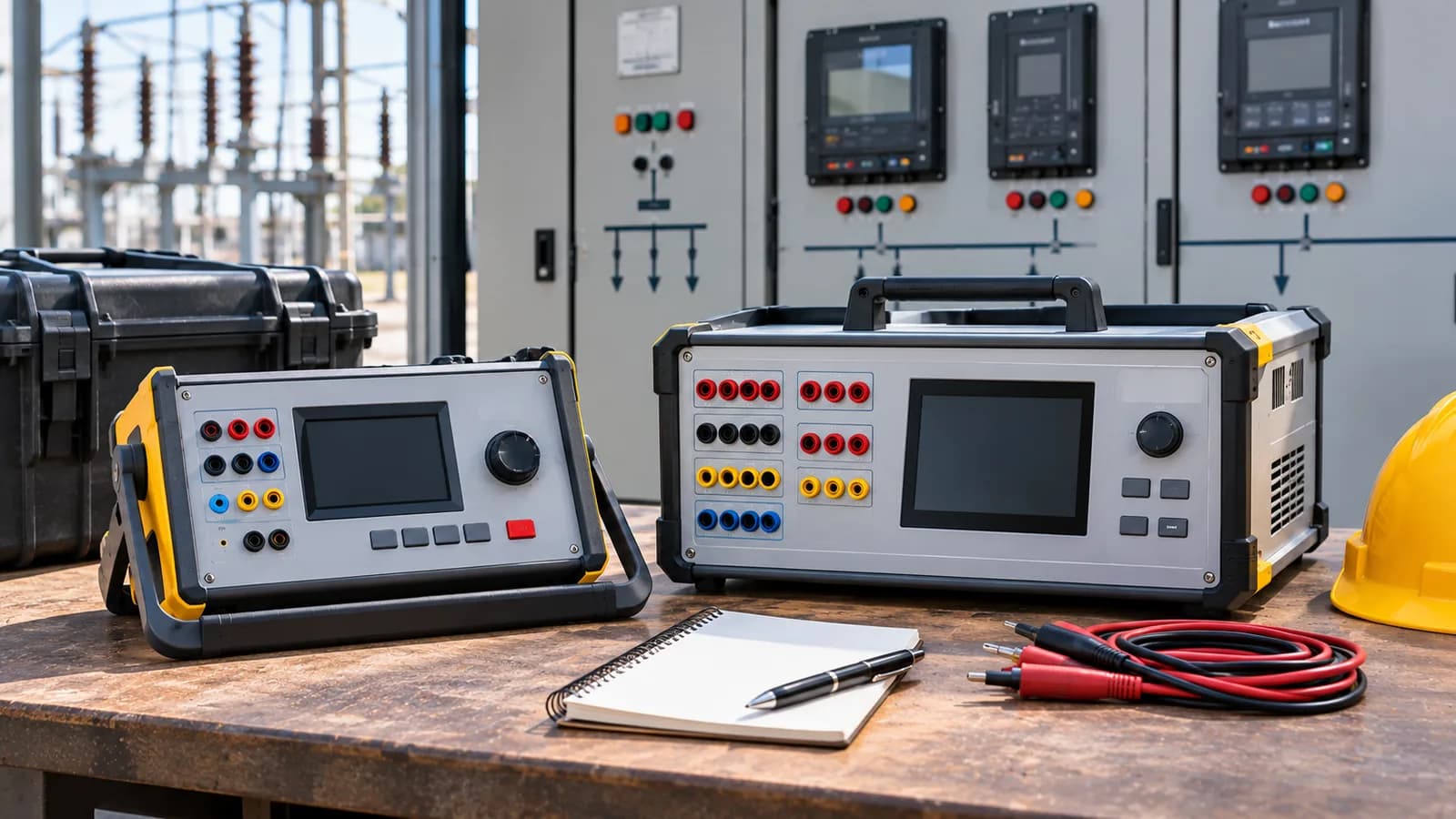
The answer is only an estimate. A small error in the velocity factor can move the result by one or two percent, and the distance is along the cable, which is rarely the straight line on a drawing. Slack, joints and route changes all add length. Set the velocity factor from the actual cable type, or measure it on a known length. The CFL510G is a handheld TDR and the CFL535G is a dual-channel model.
Stage 2: high-resistance faults and arc reflection
Most faults on MV cable are high resistance. Arc reflection applies a high-voltage surge at the same time as the TDR pulses. The surge makes the fault arc, and the arc gives the pulse a low-impedance point to reflect from for a moment, so the TDR can see it.
This is the job of a thumper, or surge wave generator. In our range, the EZ-Thump 3 kV and 4 kV are portable LV systems, and the EZ-Thump 12 kV covers MV cable. The Smart Thump ST25-30, SFX32 and SWG 1750 go further for longer cables and higher voltage classes.
Stage 3: pinpoint the fault
Pre-location tells you roughly where to go. Pinpointing tells you where to dig. The usual method is acoustic: the thumper repeatedly discharges into the fault and you walk the route with a pinpointer, listening for the sound of each discharge at the ground surface. The digiPHONE+2 uses electromagnetic and acoustic signals together. The time gap between them shows whether you are getting closer.
Trace the route before you start if the drawings are not reliable. The Easyloc RxTx traces cable and service routes, and the DCI3 identifies one cable among several. Cutting the wrong cable is a far worse outcome than a slow fault search, so identify it properly before anyone cuts.
Sheath faults
A sheath fault damages the outer jacket and leaves the conductors in service for a while, but water gets in and the cable fails later. It calls for a different method. Bridge measurements pre-locate the fault, and a voltage gradient search pinpoints it from the ground surface. The MFM10-1 is a mobile sheath fault locator that works up to 10 kV DC. The ESG NT2 and KMK8 bridge are also in the range.
Testing the repair
A repaired cable should be proved before it goes back into service. VLF test sets apply a very low frequency voltage, so even a long cable can be tested with a portable unit. We stock the VLF CR-28, CR-40 and CR-60 cosine-rectangular sets, and the VLF Sine range. For diagnostics, the TDM series and the MV DAC-30 go further. Follow the test voltage and duration in your project specification or the cable standard.
Choosing a system
- LV networks: EZ-Thump 3 kV or 4 kV, or the Fault Sniffer 2.
- MV cable on a contractor's van: EZ-Thump 12 kV, with a digiPHONE+2 for pinpointing.
- Regular fault work on MV and HV networks: Smart Thump, SFX32 or the Centrix Evolution.
- Sheath testing on new or existing runs: MFM10-1.
Common questions
Why can't my TDR see the fault?
It is probably a high-resistance fault. The TDR pulse does not reflect off it until a surge makes it arc, so you need arc reflection.
What is a thumper?
It is a surge wave generator. It stores energy in capacitors and discharges it into the cable, so the fault arcs and makes a sound you can pick up on the surface.
Can thumping damage a cable?
Repeated high-energy surges stress the insulation, so use the lowest voltage that breaks the fault down and keep thumping time short.
Do I need a separate TDR if I buy an EZ-Thump?
Check the configuration of the model you are buying. Send us the cable type and voltage class and we will confirm what the job needs.
Buying in Dubai
See the full range in cable fault location. We are a supplier and stockist, not an authorised Megger distributor. We deliver across all seven emirates. Send the model number or your cable details on WhatsApp and we will reply with a price the same working day.