UAE Midday Break 2026: What Sites Must Provide
Outdoor work in direct sun is banned 12:30 to 15:00 from 15 June to 15 September. Fines reach AED 50,000 per worker. What employers must put in place.
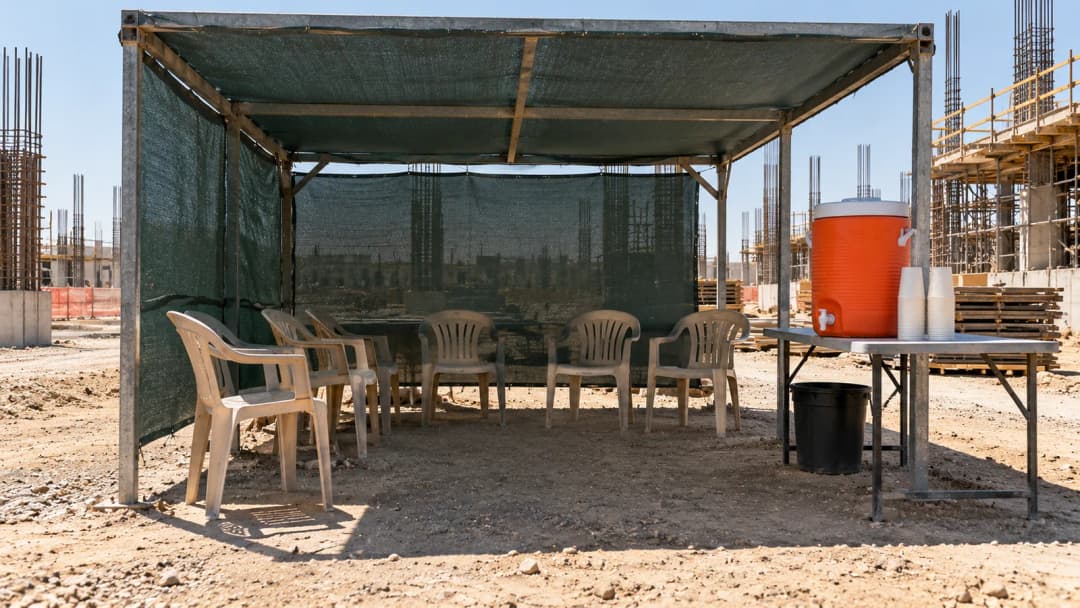
From 15 June to 15 September 2026, work in direct sunlight and in open-air sites is prohibited between 12:30 and 15:00 across the UAE. Employers must provide shaded rest areas, cooling, drinking water and first-aid facilities, and daily hours across the morning and evening shifts must not exceed eight. Penalties run to AED 50,000 per worker.
This is the twenty-second year the Ministry of Human Resources and Emiratisation has run the midday break. The rule itself is simple; the compliance detail and the equipment you need on site are where sites get caught out.
Who it covers
The ban applies to anyone working in direct sunlight or an open-air environment. In practice that means:
- Construction sites across all trades — labourers, steel fixers, roofers, masons, painters
- Road and infrastructure projects
- Oil and gas field operations
- Landscaping and outdoor maintenance
- Logistics yards and loading docks
Work that must run continuously for technical or safety reasons — certain utility interventions, concrete pours that cannot be interrupted, emergency works — is handled through the exemption process rather than by local judgement. Confirm the current exemption route with MOHRE before relying on it.
What has to be in place
| Requirement | What inspectors look for |
|---|---|
| Shaded rest area | Sufficient capacity for the whole shift, not a token structure |
| Cooling | Fans, misting or air conditioning in the rest area |
| Drinking water | Cool water, accessible without leaving the work area, replenished |
| First aid | Stocked kit and a trained first aider on site |
| Working hours | Morning and evening shifts totalling no more than eight hours |
| Rest schedule posted | Break times displayed where workers can see them |
Heat stress is not only about the break
The 12:30 to 15:00 window is a legal minimum, not a risk assessment. Wet bulb globe temperature — which combines air temperature, humidity, radiant heat and air movement — regularly stays in the danger band well outside those hours in a Dubai August, particularly in enclosed plant rooms, tanks and scaffolded elevations where there is no air movement at all.
A site relying solely on the clock will still see heat exhaustion cases at 11:00 and at 16:00. The practical additions that work:
- Measure it rather than guess. A heat stress or WBGT meter gives you a defensible number for a risk assessment and for toolbox talks. We stock environmental instruments including temperature and humidity meters.
- Rotate rather than push through. Short, frequent rotations out of the heat beat one long break for sustaining output through a shift.
- Water placement decides water intake. If the cooler is a five-minute walk away, people stop drinking. Put it where the work is.
- Brief supervisors on the early signs — confusion, stumbling, stopping sweating. By the time someone collapses you have lost the window for simple intervention.
PPE that works in the heat rather than against it
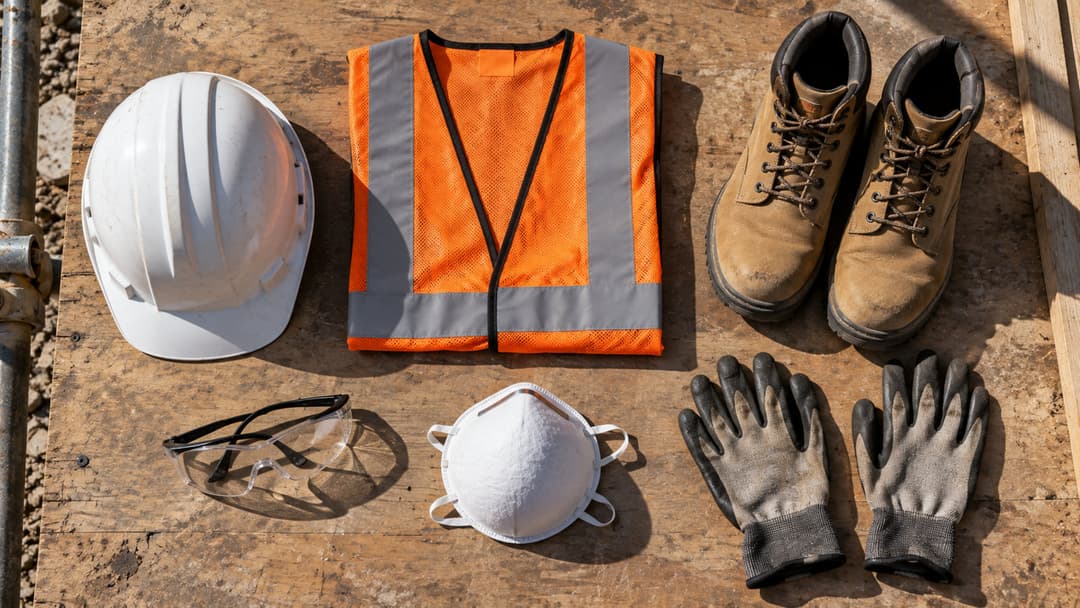
Summer PPE compliance fails for a predictable reason: if the kit is unbearable, people take it off. Specifying for the climate is a safety measure, not a comfort one.
- Helmets with ventilation and a sweatband, plus a neck shade for sustained outdoor work. Browse safety products.
- High-visibility clothing in breathable or mesh fabric rather than solid polyester — a reflective safety vest in mesh is worn, a laminated one is not.
- Coveralls appropriate to the task. A disposable coverall traps heat quickly; reserve full chemical or FR coveralls for the tasks that genuinely need them instead of issuing them as default.
- Gloves sized and specified for grip, not bulk. Nitrile coated gloves and PU coated gloves stay usable in heat where heavier builds do not.
- Eye protection with anti-fog coating. In high humidity, uncoated lenses fog within a minute and get pushed onto the forehead, which is the same as not wearing them.
- Safety footwear that breathes. Steel toe safety shoes in a ventilated upper, with spare socks available, reduce the foot problems that build over a summer.
Common questions
Do the exact dates change each year?
The 15 June to 15 September window has been consistent, but MOHRE confirms it annually. Check the current announcement rather than assuming last year's dates.
Does the ban apply to indoor work?
It targets direct sunlight and open-air environments. Indoor work is not covered by the ban — but an un-air-conditioned plant room in August can be hotter than outside, and general duty of care still applies.
What is the penalty for non-compliance?
Fines reach AED 50,000 per worker, and repeat breaches affect a company's establishment classification.
Can workers agree to keep working through the break?
No. It is not waivable by agreement. The obligation sits with the employer regardless of what workers prefer.
Kitting a site out
We supply PPE, hydration and site safety equipment from our counter on Naif Road, Deira, alongside the test instruments and tools. Collect the same day or take delivery across the seven emirates in one to two working days, and send a list for a same-day quotation. Request a quotation or get in touch.
Dates, hours and penalties here reflect MOHRE's 2026 announcement. Always confirm against the current ministerial guidance for your site.